ExoMars: Front Shield Integration Begins
26.06.2026
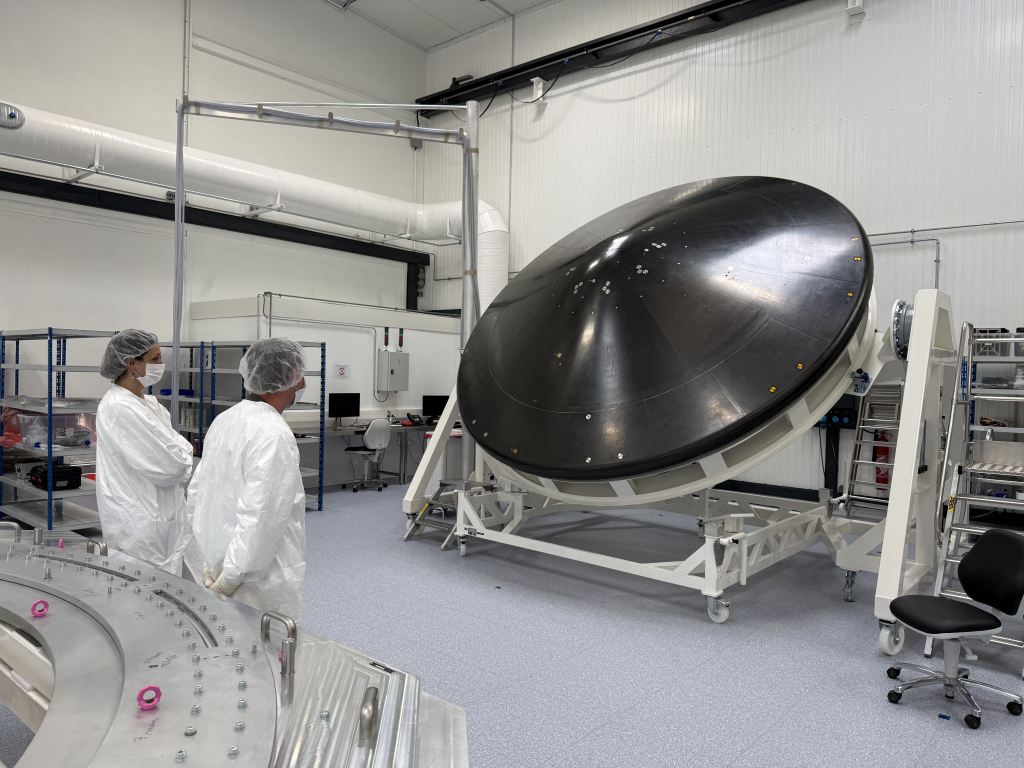
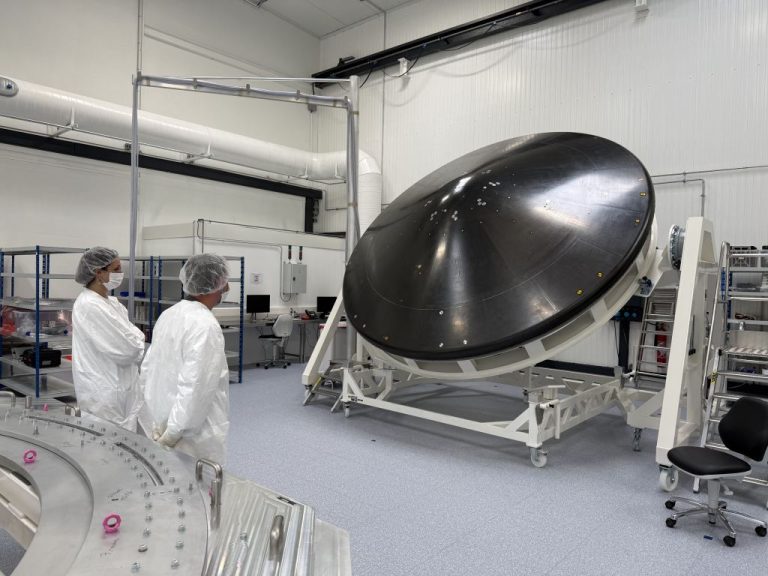
The European ExoMars Rosalind Franklin Mission (RFM) programme has reached a new milestone at ArianeGroup’s site in Issac following the arrival of the Mars entry capsule’s front shield structure.
The front shield is a mission-critical component, serving as the Rosalind Franklin rover’s first line of defence during entry into the Martian atmosphere. During this particularly demanding phase, the capsule will reach speeds of nearly 21,000 km/h and be exposed to temperatures of up to 1,800°C.
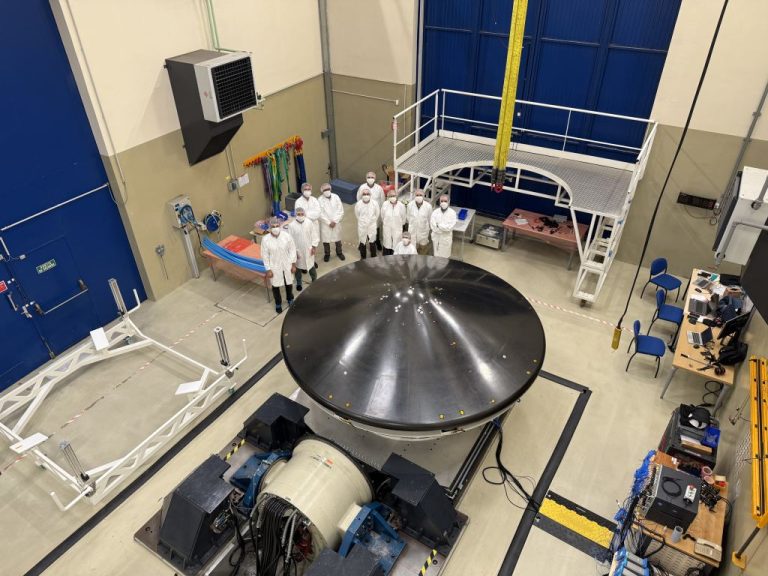
Before being transferred to the clean room, the front shield’s flight structure underwent a series of vibration acceptance tests at the site’s test facilities. These tests were carried out to verify the structure’s mechanical integrity and its ability to withstand the significant dynamic loads it will experience during the probe’s launch and interplanetary journey to Mars.
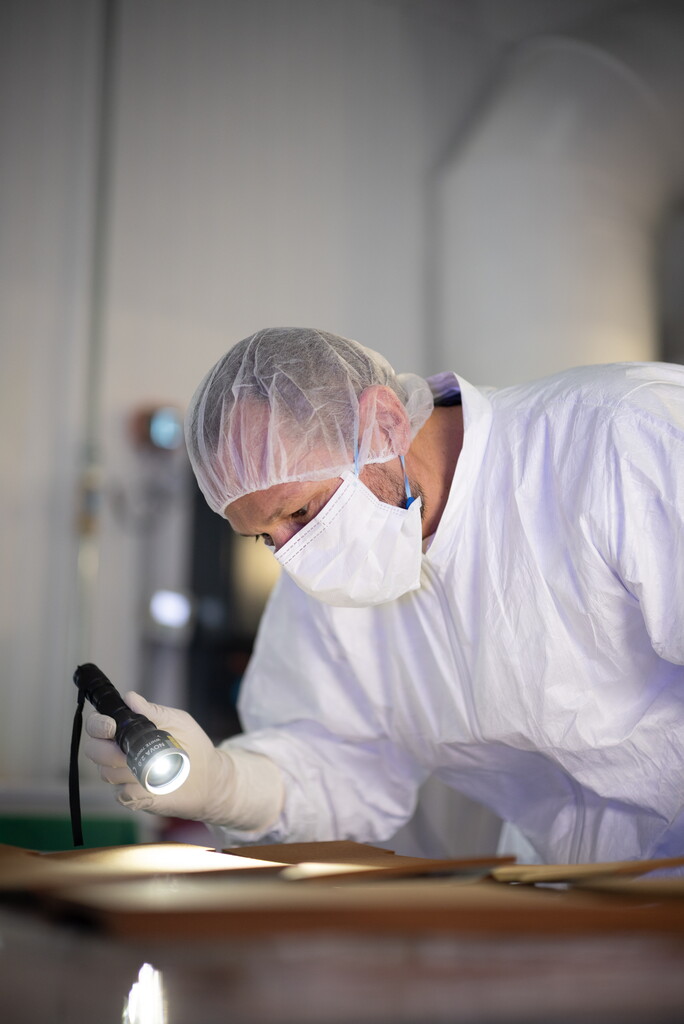
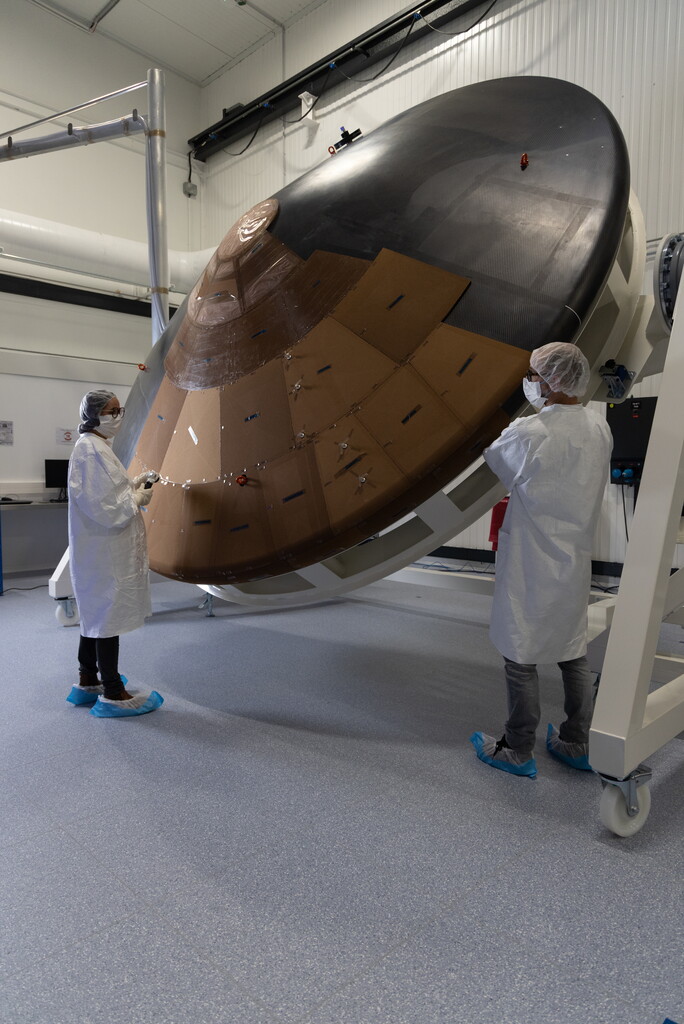
The shield was then transferred to the clean room, where teams began bonding the space-qualified Norcoat® Liège HPK thermal protection material. Qualified by ArianeGroup, this cork-based material will provide thermal insulation for the structure during entry into the Martian atmosphere.
The front shield consists of a carbon fibre/aluminium honeycomb sandwich structure supplied by Airbus Defence and Space Madrid, onto which the protective cork tiles are bonded. These high-precision operations draw on ArianeGroup’s extensive expertise in the design of atmospheric re-entry systems.
As part of the ExoMars mission, ArianeGroup is responsible for several key components of the Mars entry capsule, including the front shield, the thermal protection systems for the back shell and telemetry antennas, and the instrumentation and thermal seal between the front shield and back shell.
The ExoMars programme is being developed by Thales Alenia Space Italia (TAS-I) on behalf of the European Space Agency (ESA). The Rosalind Franklin rover, developed by TAS-I and Airbus Defence and Space UK, will search for signs of past or present life on Mars, notably using a drill capable of extracting samples from depths of up to two metres.
Scheduled for launch in 2028, the mission will mark another major step forward for Europe’s exploration of Mars and for the ArianeGroup teams contributing to this remarkable technological endeavour.