International Space Summit: ArianeGroup and its subsidiaries committed to a sovereign, competitive Europe in space
18.09.2026
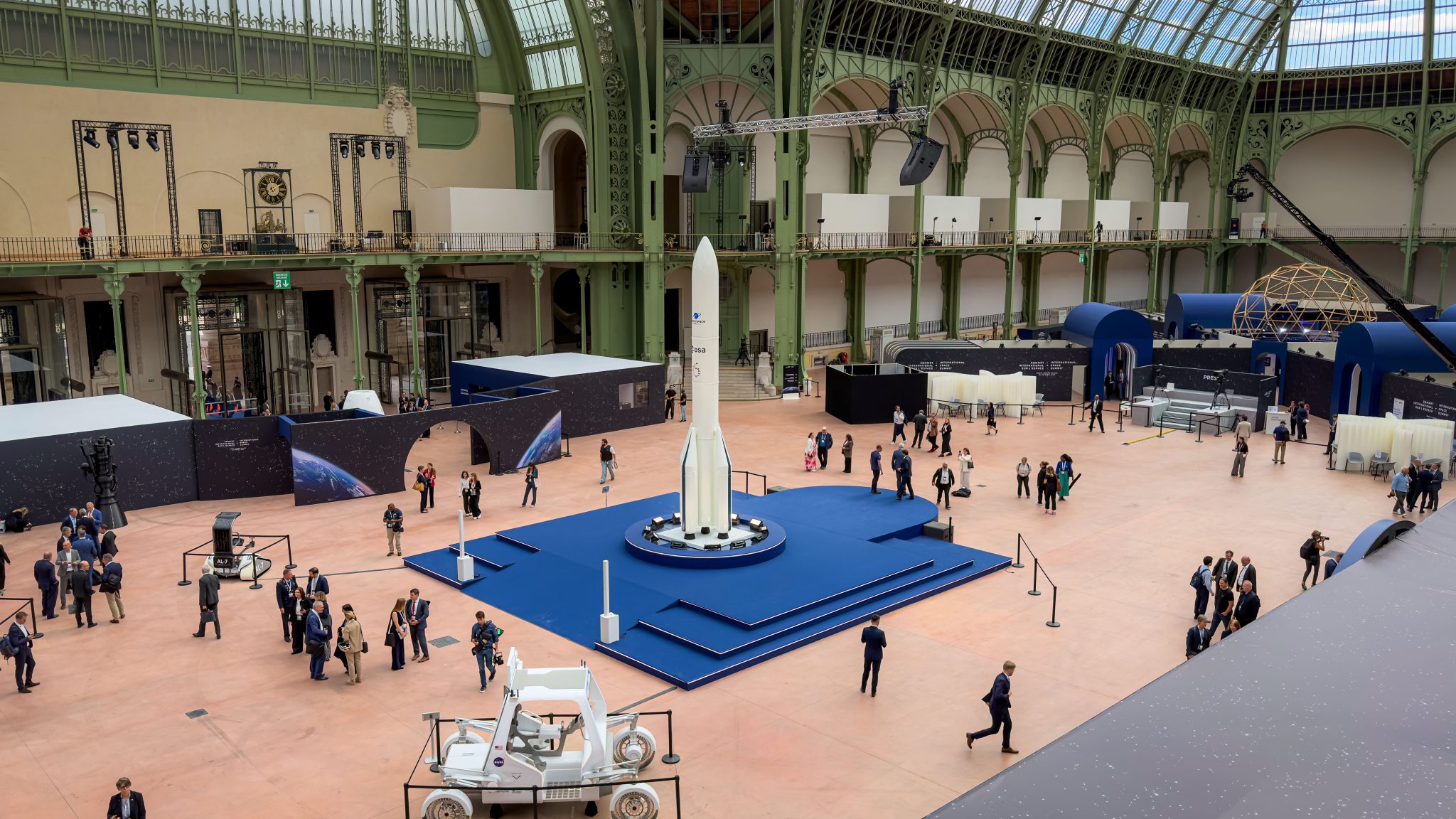
On 9 and 10 September, the Grand Palais in Paris hosted the first International Space Summit, co-organised by France and Germany. The inaugural event brought together political leaders, space agencies and industry representatives to discuss European autonomy, the competitiveness of Europe’s space sector, innovation and security.
At the Summit, ArianeGroup, Arianespace and MaiaSpace demonstrated their shared ambition to ensure Europe has autonomous access to space and can hold its own in an increasingly competitive global market.
Turning ambitions into decisions
For ArianeGroup, the Summit was first and foremost a political event. The focus must now shift from ambition to action, particularly in the EU’s next Multiannual Financial Framework (MFF), which will determine a proportion of the funding available for space policy.
This will also require changes to Europe’s space model. Large-scale orders, public-private partnerships (PPPs) and European preference can give industry greater certainty over future demand and help unlock investment.
These issues are not confined to the civil space sector. Discussions on defence highlighted the dual-use nature of space — a defining feature of ArianeGroup — and the importance of sovereign infrastructure for Europe’s communications, economy and security. IRIS², Europe’s sovereign secure communications constellation, is a prime example.
Ariane 6 in the spotlight
At the Grand Palais, a nine-metre-tall model of Ariane 64, the four-booster version of Ariane 6, underscored the launcher’s central role in this strategy. Europe’s heavy-lift launcher has now successfully completed nine missions, with a target of nine to ten launches per year from 2027.
The priorities are clear: ramp up the launch cadence, further improve competitiveness and attract new customers. Arianespace, the ArianeGroup subsidiary that markets and operates Ariane 6, is leading this drive.
The Summit also saw Arianespace record its highest order intake since Ariane 6 entered service, with seven contracts and memorandums of understanding signed over the two days.
David Cavaillolès, CEO of Arianespace, said: “The agreements signed in Paris, covering almost ten launches, are Arianespace’s largest intake of orders since Ariane 6 entered service. They underscore the launcher’s growing commercial success and its ability to serve a wide range of missions. Europe’s heavy-lift launcher has a dual ambition: to ensure Europe’s autonomous access to space and compete in the international commercial market. The announcements made at this Summit show that these two ambitions go hand in hand, each strengthening the other.”
MaiaSpace: pioneering the next generation of launchers
Founded by ArianeGroup in 2022, MaiaSpace is developing Maia, a new-generation reusable mini-launcher. While Ariane 6 serves major institutional and commercial heavy-lift missions, Maia is complements de Group’s offer and is aimed at the market for constellations and small satellites in low Earth orbit.
Together, the two launchers reflect ArianeGroup’s evolving ecosystem and its ability to offer a range of solutions for diverse European and international needs.
Over the two days, ArianeGroup and its subsidiaries demonstrated the three pillars of their shared ambition: Ariane 6 to secure and expand Europe’s access to space, Arianespace to bring these launch services to customers worldwide, and MaiaSpace to develop the next generation of launch solutions.
Moving to the next level
The Paris Summit provided an opportunity to take stock of how far Europe has come — and how much remains to be done. Europe has considerable industrial and technological strengths, but now needs to accelerate. Scaling up will require sufficient demand to sustain its industrial ecosystem, alongside the funding and policy framework needed to reconcile sovereignty and competitiveness over the long term.
For ArianeGroup and its subsidiaries, this means ramping up the Ariane 6 launch cadence, launch Maia in the second half of 2027, make progress on new reusability technologies, meeting the needs of constellations — particularly Europe’s sovereign IRIS² constellation — and making the European space supply chain more competitive.